Governance Without the Workaround: Why ‘Governance by Design’ Beats Bolt-On Brand Controls
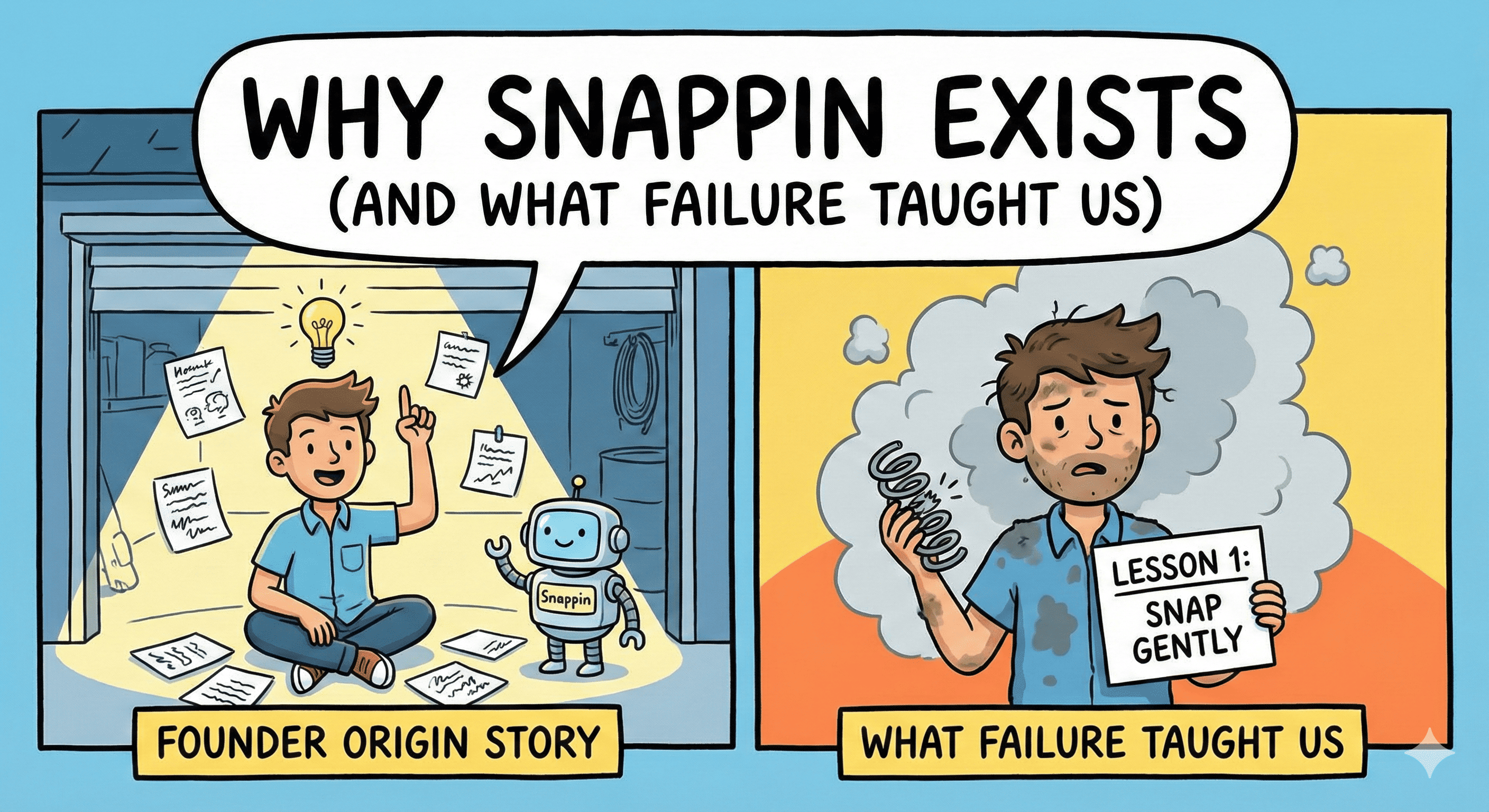
The Frontier Lesson: How We Discovered the Limits of Bolt-On Controls
We didn’t start with a thesis. We started by breaking things.
On multi-channel launches, “brand controls” bolted onto AI tools fell apart under real deadlines. Tone shifted between steps. Approvals happened outside the flow. Every exception spawned a new rule. The more we patched, the more off-brand drift we saw.
We ran full-funnel campaigns across email, social, and landing pages, expecting brand voice presets and post-generation checkers to keep everything aligned. They didn’t. The failure mode was subtle. Each tool applied rules locally, but nothing preserved strategy across steps. Edits compounded. Context fractured. Governance lived in people’s heads and Slack threads.
What broke first in real campaigns
- Approvals happened after-the-fact, so reviewers chased inconsistencies rather than preventing them.
- Asset variants drifted as soon as briefs changed channel-by-channel.
- “Brand guardrails” acted like spellcheckers, catching surface errors, not structural intent.
These patterns match what many teams report. Human oversight increases trust and quality when it’s designed into the workflow, not stapled on. In a Dynatrace study, 69% of AI-powered decisions still include human-in-the-loop checks, reflecting the reality that reliability needs structured oversight. (digit.fyi)
What is ‘governance by design’ in brand management?
Governance by design means your strategic blueprint is the execution logic, not a PDF on the side. It encodes brand voice, constraints, and approval pathways into the system itself so every output can trace back to strategy. It’s closer to “privacy by design” than “brand police,” aligning people, process, and tooling as one governance system. (labbrand.com)
Architecture 101: Bolt-On Brand Controls vs. Governance by Design
Bolt-on controls live at the edges. They rely on local prompts, templates, or post-generation checkers per tool. Governance-by-design embeds your blueprint as a data and workflow layer that spans the entire lifecycle.
Data/logic placement: where governance actually runs
- Bolt-on: Prompts and checkers live inside each app. Cross-app state is fragile. Drift accumulates.
- By design: A central blueprint service governs tone, claims, and constraints. Every step calls the same source of truth.
State continuity: blueprint → brief → draft → asset
- Bolt-on: Hand-offs lose rationale. Approvals get screenshotted. Audits are manual.
- By design: The system records lineage from requirement to output with approvals and diffs. This mirrors EU AI Act expectations for logging and human oversight in high-risk systems (and signals where the market is headed for transparency in content AI). (digital-strategy.ec.europa.eu)
How do AI brand controls usually work in popular tools?
Most attach voice presets or “brand checks” inside a single step (e.g., copy editing). They help with surface consistency but rarely preserve intent across workflows. When a brief changes, downstream assets don’t auto-reconcile and reviewers must re-enforce rules manually. Classic bolt-on behavior. Industry guidance stresses people, process, and tools alignment, not tool-only patches. (labbrand.com)
The Hidden Costs of Workarounds (Editing, Toggle Tax, and Risk)
Workarounds look cheap until you measure them. In real teams, the burden shows up as rework, context switching, and compliance exposure.
Editing burden and consistency decay
Lucidpress’ State of Brand Consistency reports associate consistent presentation with 23–33% revenue uplift—evidence that every off-brand deviation taxes growth. Bolt-on systems normalize small deviations that compound across channels. (members.asicentral.com)
The toggle tax in fragmented stacks
- Harvard Business Review–covered research observed workers toggling ~1,200 times per day, costing ~4 hours a week (about five workweeks per year). That’s governance time you never planned to spend. (reworked.co)
- Asana and others document multi-app overload; employees switch among ~10 apps daily and miss actions during switches—errors that show up as brand inconsistency down the line. (forbes.com)
How much productivity do teams lose to app switching?
Multiple studies converge: around four hours per week due to ~1,200 daily toggles, and widespread multi-app overload in knowledge work. Consolidating governance into one workflow meaningfully reduces this loss. (reworked.co)
Designing Human-in-the-Loop That Scales Quality (Not Busywork)
Human-in-the-loop (HITL) works when the product models the decision, not when humans patrol after the fact. Oversight should intervene at “strategic inflection points” (claims, tone shifts, regulated statements), not every comma.
Approval checkpoints as product, not process
- Single-click approvals embedded at draft, claim, and asset-publish stages.
- Evidence panels that show “why this output” with traceable blueprint rules and diffs.
- Exceptions that create governed patterns, not ad-hoc edits.
Research backs this approach: Bynder found 90% of teams consider human oversight essential for safeguarding brand identity; Dynatrace reports 69% of AI decisions still include a human checkpoint; consumer studies show “HITL-labeled” content can increase confidence for half of respondents. (cmswire.com)
Reducing automation bias with designed oversight
Oversight should counter automation bias, the tendency to over-trust AI. The EU AI Act explicitly anchors human oversight and awareness of such bias for higher-risk systems, reinforcing the need for designed, auditable checkpoints over manual afterthoughts. (arxiv.org)
Does human-in-the-loop actually improve trust?
Yes. Studies show confidence rises when audiences see responsible AI with human review, and industry surveys indicate teams insist on oversight to protect brand identity and compliance. The key is building oversight into the flow so it speeds decisions rather than adding delays. (blog.451alliance.com)
Compliance Gravity: Why Governance Needs to Live in the System
Regulation is codifying what builders already learned: traceability, disclosure, and human oversight.
EU AI Act timelines and human oversight requirements
- AI Act entered into force Aug 1, 2024; transparency and GPAI obligations are phasing in through 2025; high-risk requirements and transparency duties apply broadly by 2026–2027, including human oversight, logging, and documentation. Even if marketing tools are “limited risk,” the governance pattern is clear. (commission.europa.eu)
Traceability and auditability by design
Governance-by-design systems should:
- Log data lineage, prompts, and approvals per asset.
- Label AI-generated content where required.
- Provide exportable evidence for reviews.
These align with emerging codes of practice and reduce future retrofit costs versus bolt-on plugins. (euairisk.com)
Do regulations require human oversight for marketing AI?
Strictest provisions target high-risk uses, but the Act’s direction (human oversight, transparency, traceability) is shaping enterprise expectations for all AI. Teams that design these controls now avoid costly rebuilds later. (digital-strategy.ec.europa.eu)
The Buyer’s Evaluation Rubric: 20-Minute Tests to Expose Workarounds
Use these hands-on checks during any demo. If a vendor fails two or more, you’re likely buying workarounds.
1) Continuity test: strategy-to-asset trace (5 minutes)
Ask the vendor to open a finished asset and show the full lineage: blueprint element → brief decision → draft → edits → approvals → final. Require a single screen with clickable evidence. If they can’t, governance is not native.
2) Variance test: on-brand drift under pressure (5 minutes)
Change one strategic input (e.g., audience segment). Do downstream assets automatically reconcile tone, claims, and CTA, or do you manually re-edit per channel? If manual, drift will proliferate. And so will editing cost (remember: 23–33% revenue upside ties to consistency). (members.asicentral.com)
3) Oversight test: approvals without copy-paste (5 minutes)
Insert a risky claim. Can an approver see flagged passages, compare to approved claims, and approve/deny with rationale in-flow? Or must they copy text into another tool? 69% of AI decisions keep HITL because proper oversight is non-negotiable. Make sure it’s built in. (digit.fyi)
4) Compliance test: logs, labels, and disclosures (5 minutes)
Request an export showing prompts, model versions, diffs, and labels. If they can’t produce machine-readable evidence in minutes, audits will be manual and brittle, precisely what the AI Act trendline seeks to avoid. (digital-strategy.ec.europa.eu)
Snappin’s Structural Advantage: Strategy as the Command Layer
We designed Snappin around a simple conviction: strategy should command the system.
Blueprint-governed workflows
- Your approved brand blueprint is the governing service every workflow calls. Briefs, drafts, claims, and assets inherit constraints and rationale automatically.
- Human-in-the-loop checkpoints are modeled as product primitives (claims approval, tone exceptions), not ad-hoc tasks. That’s how you scale oversight without slowing down. Research shows oversight boosts trust and quality when it’s embedded. (cmswire.com)
What we don’t do (and why that helps you)
- We don’t chase “50 variations in seconds.” Our tradeoff prioritizes speed-to-quality over raw volume so you avoid the toggle tax and downstream editing queues. Studies attribute ~4 hours/week lost to app switching; consolidation pays for itself. (reworked.co)
- We’re not a CRM. That eliminates the complexity tax and feature paywalls that shift governance behind tiers.
When governance is the design, you ship coherent content with fewer edits, fewer tabs, and far better evidence trails. That’s governance without the workaround.
Conclusion
Bolt-on brand controls promise speed but bury costs in editing, hand-offs, and audits. Governance by design treats your blueprint as code: the state that every brief, draft, and asset must satisfy. The result is fewer toggles, fewer rewrites, and higher confidence across channels.
Key next steps:
- Run the 20-minute rubric on your current stack. Note every manual hand-off and missing trace.
- Pick one campaign and move approvals into the flow (claims + tone). Measure edit cycles before/after.
- Centralize your blueprint as a callable service for all content steps.
If you bookmark one idea, make it this: strategy should command the system. That’s how you get governance without the workaround.
Snappin Team
Strategy-first marketing insights from the team building Snappin — the AI Marketing Copilot that combines strategy, content creation, and scheduling in one platform.
Try Snappin freeContinue Reading
Strategy-First Positioning: A Framework for Founders
If you've invested months in an agency relationship and still can't articulate what makes your brand genuinely different, that is a positioning problem. That distinction changes everything about how you solve it. The strategy-first positioning framework gives founders a structured path to build real
Brand Design Elements: The Silent Positioning Signal
Every founder spends weeks crafting the perfect brand message. Then they unknowingly contradict it with their color palette. Brand design elements (color psychology, visual hierarchy, and typography) function as a non-verbal language that either reinforces your positioning or silently argues against
Brand Strategy Retainer: The Agency Deliverables You're Actually Paying For
A brand strategy retainer at $8k, $15k/month is built on five core deliverables: market research methodology, positioning framework, brand architecture, competitive analysis, and expression system. These are specific frameworks agencies have spent years productizing, rather than vague consulting hou